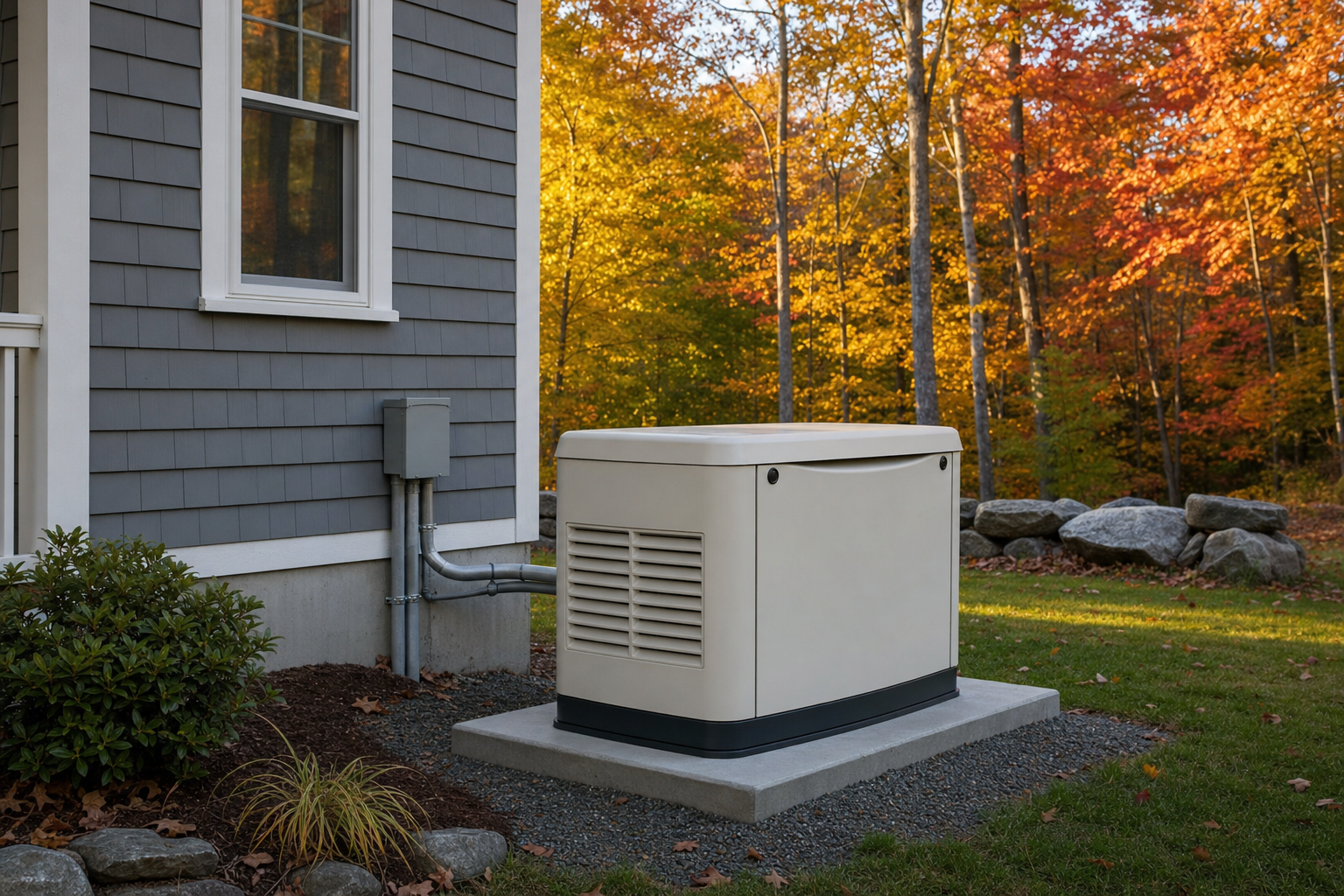
Standby vs. portable: which do you need?
- Whole-house standby generator: runs on propane or natural gas, lives on a pad outside, kicks on automatically within seconds of an outage, runs your whole panel. Set-it-and-forget-it. Best if outages are frequent, long, or you have a well, freezer, or medical equipment.
- Portable generator + inlet box: you keep a portable generator in the garage, wheel it out, plug it into an exterior inlet, flip a manual transfer switch. Much cheaper. Works great for a few-times-a-year outage.
- John walks through both options at the estimate. No sales pressure either way.
Standby generator install scope
- Site selection (clearances from windows, propane line, ventilation).
- Concrete pad or factory pad set.
- Automatic Transfer Switch (ATS) installed at the panel.
- Whole-house or essential-circuits configuration. John helps you decide.
- Propane or natural gas connection coordination (gas plumber if needed).
- Permit, inspection, commissioning, and a walk-through on how to maintain it.
Portable generator inlet & transfer switch
- Exterior weatherproof inlet (typically L14-30 for a 7,500W portable).
- Interlock kit on the panel OR a manual transfer switch with selected circuits.
- Cord supplied if requested.
- Quick walk-through on the start-up sequence so it's not a fire drill at 2am.
How a job goes
Site visit
John looks at clearances, the panel, the gas source if you've got one, and where the generator would sit.
Sizing
Honest sizing. A properly-sized 14kW will run most New Hampshire homes' essential loads. You don't always need the 24kW unit a big-box quote tries to sell you.
Written estimate
Standby installs include the generator, ATS, pad, gas coordination if needed, permit, and install. Portable inlet installs include the inlet, transfer switch or interlock, and install.
Install & commissioning
Most installs are one to two days. John commissions the unit, runs a test transfer, and hands you the manual.
FAQ
How big a generator do I need?
For a typical New Hampshire single-family home with electric range, well pump, fridge, and forced-hot-water heat, a 14kW standby usually runs everything comfortably. Homes with central AC, electric dryer, or a tankless electric water heater might need a 22kW. John runs the load calc for your specific house, not a generic one.
Propane or natural gas?
Natural gas if you've got a utility line at the house. Cleanest, no tank to fill. Propane if you don't. Either runs the same generator with a fuel conversion kit. John will look at what's already on site.
Do standby generators need maintenance?
Yes. Oil change once a year or every 200 hours, air filter and spark plug per the manufacturer schedule. John can do the annual service or you can do it yourself. The generator runs a self-test once a week for about ten minutes. You'll get used to the sound.
Will an interlock kit work instead of a transfer switch?
For a portable generator setup, yes. A panel interlock (a sliding plate that prevents the main and generator breakers from being on at the same time) is a code-approved alternative to a transfer switch. John uses interlocks from Square D, Eaton, and Siemens depending on your panel.